Welcome to Moving Windmills.
This is your Invitation to Innovate
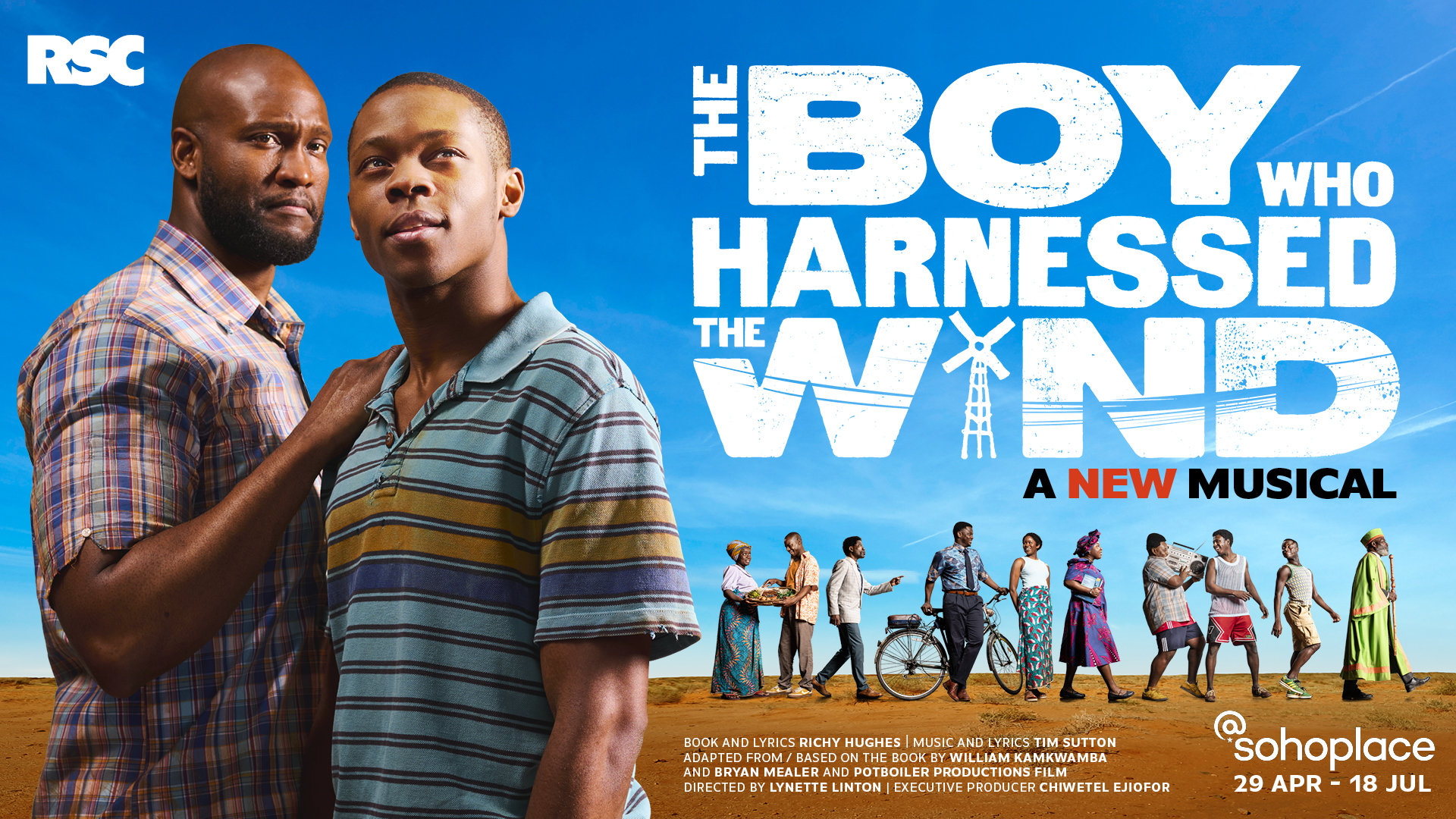
In 2001, a 14-year-old named William Kamkwamba was forced out of school by famine. Teaching himself from library books, he built a windmill from scrap that powered irrigation for his family’s fields. That act of necessity became a movement — a memoir, a TED Talk, and a Netflix film. Today, it is an RSC musical on stage in London’s West End.
Since 2008, Williams’ story and Moving Windmills have been turning that spark into something durable.
Williams curiosity has inspired thousands and the Moving Windmills charitable trust (501c3) continues its mission to promote projects that benefit poor and distressed communities by stimulating their economies, creating jobs, and alleviating conditions associated with poverty. Success is identifying future leaders within these communities and providing them with opportunities to acquire new skills and experience to help lift their communities out of poverty.
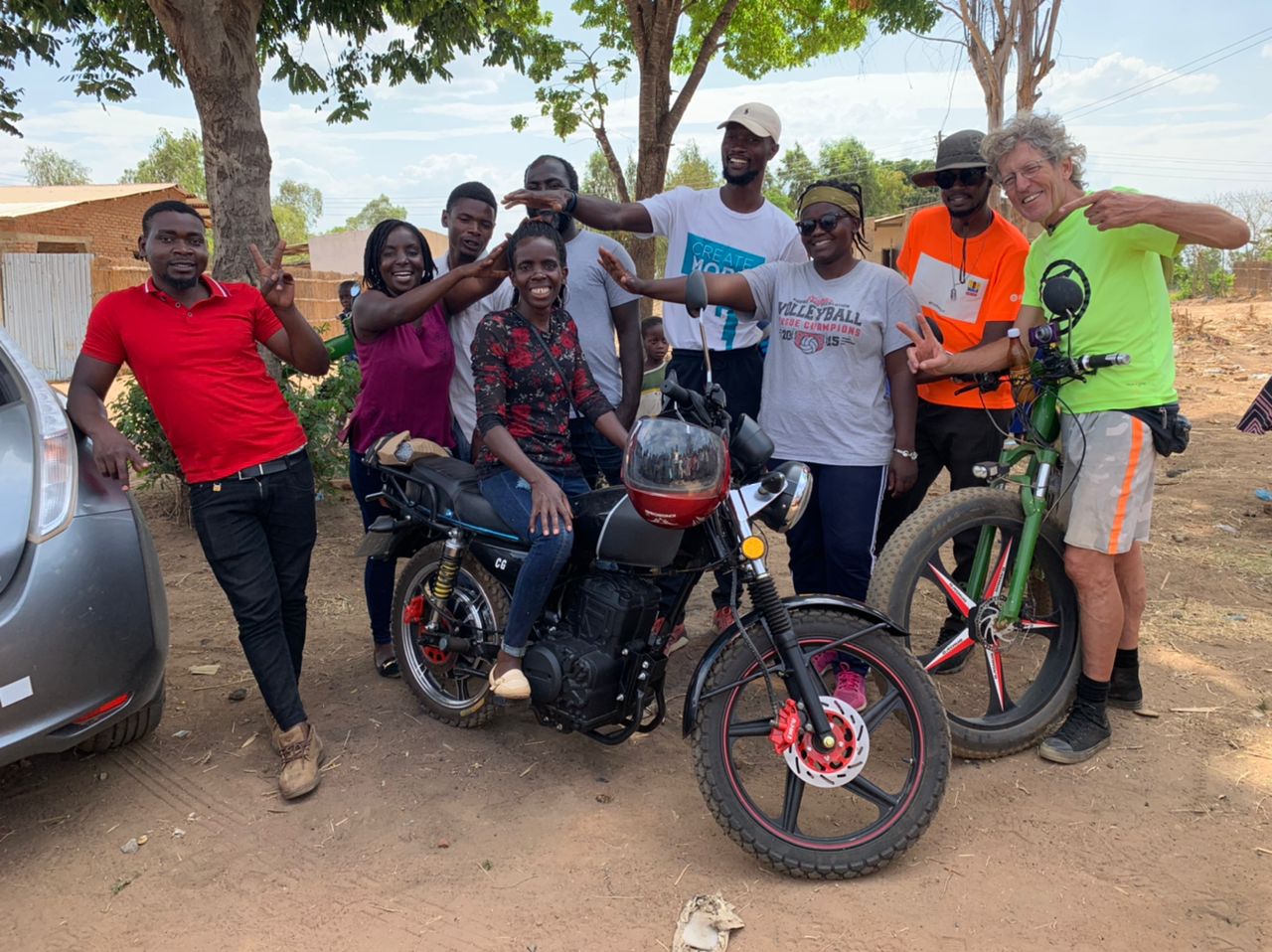
For the last seventeen years, Moving Windmills has been building resilience across six community hubs in Kasungu — Kalenga, Wimbe, Chitenje, Chilanga, and Mtunthama by building the infrastructure, relationships, and local knowledge to support the next generations of innovators.
From one windmill, a network of communities, a hit film and a West End play and now, the Moving Windmills community approaches its next stage.
The Innovation Center is being built in Kasungu as a living lab — a place where young Malawians aged 16 to 25 learn by operating and maintaining the systems around them and directly address Malawi’s greatest challenges. The campus is designed to be built from local materials and maintained by the people who use it. It connects directly to the six existing community hubs, which become both its context and its proof.
The Finished Product
Your content goes here. Edit or remove this text inline or in the module Content settings. You can also style every aspect of this content in the module Design settings and even apply custom CSS to this text in the module Advanced settings.
test
Your content goes here. Edit or remove this text inline or in the module Content settings. You can also style every aspect of this content in the module Design settings and even apply custom CSS to this text in the module Advanced settings.
Challenge Areas
Platform
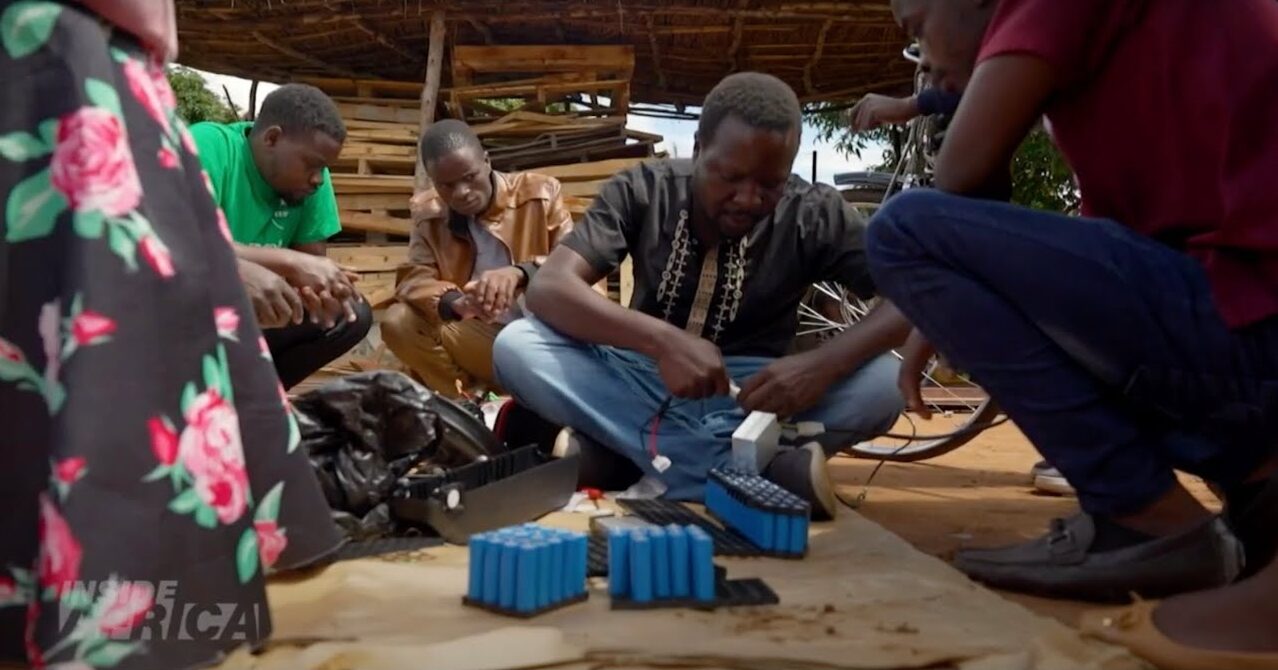
How do you monitor soil moisture, water stress, microclimate, and crop conditions across six community hubs in real time — when the data infrastructure for this region does not yet exist? A distributed sensor network creates the first open dataset of its kind for rural Kasungu. It is also the verification backbone for the carbon & climate finance stream.
Engineering departments, technology companies, and data research groups can help design, deploy, and maintain the network — contributing to a shared dataset that underpins carbon verification, agricultural research, and campus operations.
The challenge
Rural Malawi faces chronic energy poverty and unreliable water access. The campus operates entirely on renewable energy and harvested water — every system monitored, logged, and studied. What works here works for the region.
Partnership opportunity
Engineering partners, equipment donors, and research institutions willing to co-develop off-grid systems replicable across sub-Saharan Africa. Fellowship placements available.
The challenge
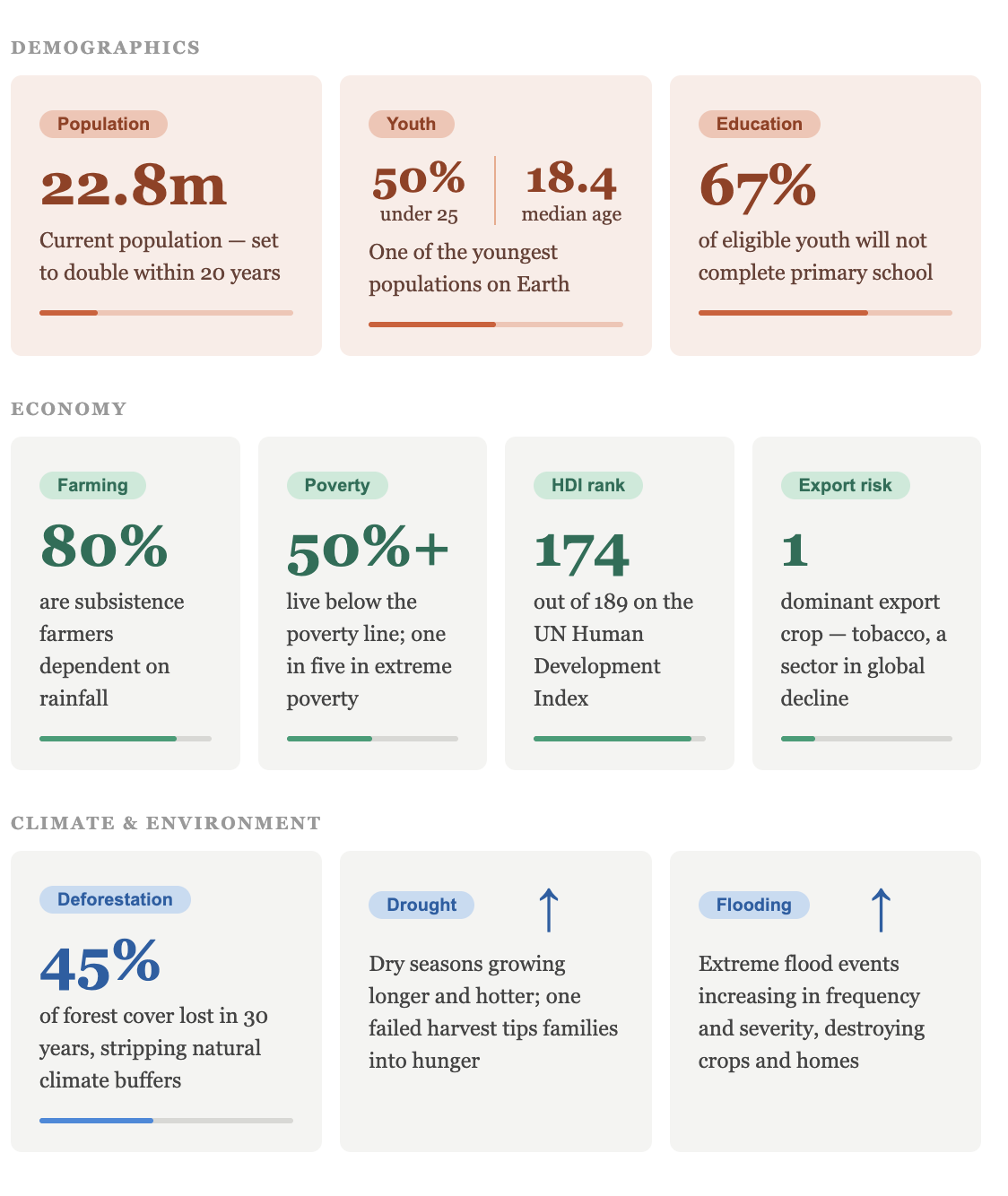
Kasungu has lost 45% of its forest cover in thirty years. Smallholder farmers face degraded soils from monocropping, rising input costs, and rainfall patterns that are fundamentally changing. The hub network is the testing ground for regenerative, climate-resilient land management that works at community scale.
Partnership opportunity
Agronomists, land restoration specialists, and food systems researchers can embed within the campus and six community hubs — co-designing practices that transition farmers from subsistence monoculture to productive, regenerative systems. The dataset for this region does not yet exist.
The challenge
Phase 1 is built with Compressed Stabilised Earth Blocks, bamboo, timber, and woven structures — all locally sourced and produced. Designed by MASS Design Group, championing architecture that serves communities and builds sustainably from what is already in the ground.
Partnership opportunity
Materials scientists, structural engineers, and construction innovators can test and validate emerging techniques at real scale. Every building is both a prototype and a permanent facility.
The challenge
Young Malawians aged 16–25 operate and maintain all campus systems as the core of their technical education. The training model is the programme — learning by doing, in the spirit of William Kamkwamba's original windmill.
Partnership opportunity
Partners who understand vocational education and workforce development are essential. We are building the curriculum alongside the buildings — Phase 2 and beyond depends on it.
The challenge
The MWIC is designed as a living lab — every system is a research question. We need engineering departments, social scientists, and development researchers who want embedded, long-term engagement generating climate data and findings with global relevance.
Partnership opportunity
Universities, NGOs, and policy bodies can embed researchers, run longitudinal studies, and co-author findings from the campus. Fellowship and residency positions available.
The challenge
We are building community-led carbon credit platforms where at least 60% of income flows directly to the communities generating it. Credible sensor data across the hub network is the verification backbone — without it, the programme cannot be certified.
Partnership opportunity
Carbon verifiers, impact investors, and climate finance platforms can help design the model, certify the data streams, and unlock funding flows that reach rural communities directly.

The challenge
The campus produces skills, materials, data, and energy — but none of it becomes self-sustaining without answering the question every other challenge area avoids: what is the business model? How do apprentices, farmers, and community members turn outputs into locally-owned enterprises that generate income, reduce dependency on aid, and demonstrate that a sustainable African NGO is not a contradiction in terms?
Partnership opportunity
Business schools, impact investors, accelerators, and corporate social innovation teams can help design enterprise models, mentor emerging entrepreneurs, and connect local producers to markets. This is the challenge that makes every other challenge area viable in the long run.
Each challenge area is open for collaboration — research partnerships, embedded placements, technical co-design, or funding. No organisation needs to cover everything. The communities are already here. We are looking for individuals and organisations who want to create a spark!
If the Challenge & Innovation areas get you excited or you think we have missed an opportunity – PLEASE reach out.